
Unprecedented! The United States will impose a 15% tariff on the European Union!

The US and Europe have reached the "biggest trade deal in history" : a $1.35 trillion economic game under a 15% tariff framework
Trump's political show on the golf course and the reconfiguration of transatlantic relations
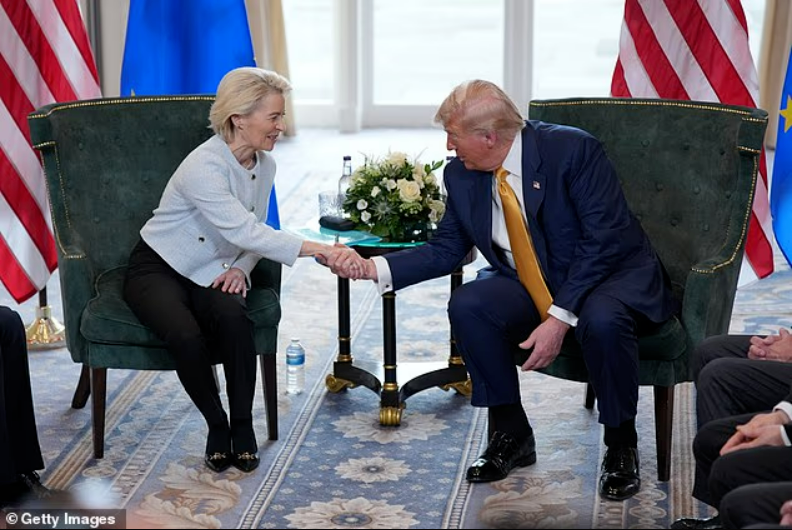
一、Core agreement content
1? ? us tariffs: The United States will impose a uniform 15% "benchmark tariff" on goods exported from the European Union to the United States, covering the vast majority of goods (such as automobiles, semiconductors, and medical products). This tax rate:
? is significantly lower than 30% of the previous trump threat.
? is higher than the EU 's pursuit of "double zero tariffs". Von der Leyen admitted, "15% should not be underestimated, but it is the best condition we can get."
Exceptions and Disagreements
? Both sides agree to exempt tariffs on aircraft and their components, certain chemicals, generic drugs, semiconductor equipment, certain agricultural products, natural resources and key raw materials.
? The tariff arrangement for spirits is undetermined.
? steel and aluminum tariff disagreement: Trump says to maintain 50% high tariffs; Von der Leyen said it would be downgraded and replaced by a quota system.
2? ?eu concessions:
No retaliation: The EU has committed not to take retaliatory tariff measures.
Huge procurement and investment
? added $750 billion worth of U.S. energy products (such as liquefied natural gas).
? adds $600 billion in investment to the United States.
? purchase of U.S. military equipment (amount not specified).
二、Financial market reaction
? cautiously optimistic: After the news was released, the euro rose slightly (appreciated by about 20 points against the US dollar, the British pound and the Japanese yen).
? Positive factors: Temporarily eliminating the uncertainty of the escalation of trade conflicts and stabilizing market sentiment (analogous to the US-Japan agreement).
? Concerns: Lack of a specific implementation timetable, and the subsequent execution situation needs to be observed.
三、The impact on trade between the United States and Europe
1? ? to the European Union:
? Rising export costs: A 15% tariff will increase the cost of goods from the EU to the US and curb exports (especially in manufacturing industries such as automobiles). For instance, the tariff on German passenger vehicles exported to the United States has risen from 2.5% to 15%, which has undermined its competitiveness.
? Economic growth is under pressure: It is expected to cause the overall GDP growth rate of the European Union to decline by about 0.3%, and export-oriented economies (such as Germany) will be hit harder.
? Shrinking trade surplus: aimed at rebalancing the eu 's huge trade surplus in goods with the us (235.6 billion US dollars in 2024).
2? ? to the United States:
? Narrowing the trade deficit: the EU 's huge energy purchases and investments will increase U.S. exports and capital inflows.
? industry benefit: U.S. energy exporters (LNG, oil) and military industrial enterprises will directly benefit from European orders.
? Potential negative: The 15% tariff will push up the cost of imports in the United States, which may lead to rising domestic prices and inflationary pressure.
四、Summarize the potential impact on the negotiations with our country
The new agreement between the United States and Europe has significantly enhanced the United States' position and leverage in the China-Us trade negotiations, making the negotiation environment that our country is facing even more severe. The US side is very likely to:
1? ? raise the asking price: especially in requiring our country to conduct large-scale, verifiable commodity purchases (particularly in energy and agricultural products) and open up investment in specific fields, referring to or even exceeding the scale committed by the EU.
2? ? intensify pressure: take advantage of the appearance and psychological superiority of "Western solidarity" and adopt a tougher negotiating stance.
3? ? set reference benchmarks: take certain provisions of the US-EU agreement (such as tariff levels and commitment scales) as the starting point or benchmarking object for negotiations with our country.
The US and the EU reached an agreement to prevent the escalation of the trade war. The core of this was that the US imposed a 15% benchmark tariff on EU goods in exchange for the EU's commitment not to retaliate and huge purchases and investments. The agreement will put pressure on the EU's exports and economy, helping the US narrow its trade deficit, but it may also push up inflation in the US. There are significant differences in evaluations among all parties. The details of the agreement (especially the tariffs on steel and aluminum) and its specific implementation remain uncertain.
Address:22nd Floor, Block A, Liandu Building Futian Street, Yiwu City, Zhejiang Province
Telephone:0579-85391393
Cell phone:13216796913
;)